Making the Cut: How to Hold Spiritual Experience and Reason
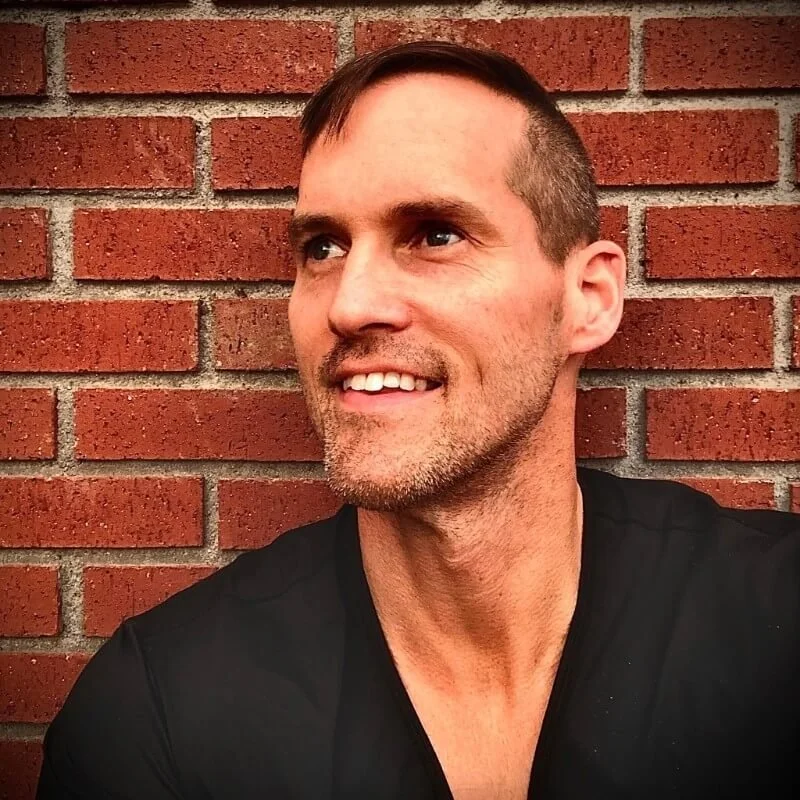
By Pastor Aaron Van Voorhis | Central Avenue Church
Listen to the full podcast episode on this topic from our gathering on
10/18/26, including a group discussion at the end.
What if being a person of faith doesn’t mean choosing between spirituality and reason? What if we can take our mystical experiences seriously without abandoning critical thinking? And what if doubt and uncertainty aren’t obstacles to a healthy spiritual life, but essential parts of it?
These are questions I think about often at Central Avenue Church. We’re a community of mystics and misfits, a place for people who are curious about the sacred but aren’t necessarily comfortable with all the answers religion has traditionally provided. We want to remain open to mystery without losing our grounding in reality. We want to be spiritual without checking our brains at the door.
I believe we can do both. In fact, I think we need to.
The Unexpected Origins of Modern Science
I want to begin with a story about René Descartes, the seventeenth-century French mathematician and philosopher widely regarded as one of the architects of modern scientific thought. You might remember him from middle school math. He’s the guy we have to thank for the Cartesian coordinate system, the familiar X and Y axes we use to graph equations.
Descartes helped develop a method of systematic inquiry grounded in reason, skepticism, and the testing of ideas. His work became foundational to modern philosophy and scientific thinking.
But there’s a fascinating and lesser-known part of his story: Descartes attributed some of his most important intellectual breakthroughs to a series of dreams and visions he experienced on the night of November 10, 1619.
According to his account, Descartes was a young man traveling through southern Germany during the Thirty Years’ War. That night, he experienced a series of extraordinary dreams that he interpreted as a divine revelation about his life's work. He came away believing he had been given a mission to unite mathematics, science, and reason in a way that could unlock the secrets of nature.
Think about that for a moment. One of the intellectual figures most associated with the rise of modern rationalism traced an important part of his calling to a mystical experience.
There's a certain irony in that, isn't there?
We often imagine science and spirituality as opposing forces. Science belongs to reason, evidence, and the material world. Spirituality belongs to faith, intuition, and the mysterious. We're told that we have to choose one or the other.
But history tells a more complicated story. Many brilliant scientists and philosophers have also been deeply spiritual people. The human desire to understand the world has never been entirely separate from our desire to experience wonder, meaning, and transcendence.
I don't think we have to choose between being spiritual and being rational. The challenge is learning how to hold both together.
Making the Cut: Taking Our Experiences Seriously Without Overclaiming
One idea I find especially helpful comes from religious studies scholar Jeff Kripal, a professor at Rice University who has spent much of his career exploring the relationship between religion, mysticism, and extraordinary human experiences.
Kripal offers a way of thinking about these experiences that I find particularly valuable. He calls it “making the cut.”
Making the cut means distinguishing between our internal, subjective experiences and claims about the external, material world.
For example, I have had spiritual experiences that I might describe as precognition or clairvoyance. I've shared some of those experiences with our community before. They have felt profound to me. They've challenged my assumptions about reality and become meaningful parts of my spiritual journey.
But here's the thing: I don't necessarily know exactly what happened.
Maybe there was something extraordinary going on. Maybe there was a coincidence I couldn't explain. Maybe my mind was making connections I wasn't consciously aware of. I can acknowledge the experience without pretending I have all the answers about its cause.
For me, that's what making the cut looks like.
I can say, “This is what I experienced. It was real to me. It mattered to me. And I'm still not entirely sure what it means.”
That kind of honesty is important for several reasons.
First, it helps us stay grounded. We can remain open to experiences that challenge our understanding of the world without losing our ability to think critically about them.
Second, it protects us from manipulation. There are pastors, spiritual leaders, and religious grifters who use extraordinary experiences to claim authority over other people. They might insist that their visions prove they speak for God, that their interpretations are beyond question, or that our spiritual well-being depends on submitting to them.
When we learn to distinguish between an experience and the claims someone makes about that experience, we become less vulnerable to that kind of control.
And finally, making the cut allows us to remain curious. We don't have to dismiss something simply because we can't explain it, and we don't have to pretend we understand something simply because we've experienced it.
We can take our experiences seriously without taking our interpretations as unquestionable truth.
Just Because It's in Your Head Doesn't Mean It Isn't Real
There's another important part of this conversation: we need to be careful about assuming that an experience is less real or meaningful simply because it happens in our minds.
I'm reminded of a scene near the end of Harry Potter and the Deathly Hallows. Harry finds himself in what looks like King's Cross railway station, where he encounters Dumbledore. Harry asks whether what he's experiencing is real or happening only inside his head.
Dumbledore responds with a question that gets right to the heart of the matter: Why should it make any difference if it's happening inside Harry's head?
It's a wonderful question.
We sometimes assume that only things we can physically measure, reproduce in a laboratory, or independently verify are real and meaningful. But that assumption doesn't adequately account for the richness of human experience.
Love is real, even though we can't reduce the experience of loving someone to a single measurement. Grief is real. Beauty is real. The sense of awe we feel beneath a star-filled sky is real. Dreams can change the course of our lives. Memories can shape who we become. An encounter with music, art, or nature can transform how we understand ourselves and the world.
All of these experiences involve our minds. That's how we experience anything.
Our senses receive information from the world around us, and our minds interpret it. We never experience reality from some completely detached position outside ourselves. Our experiences are always mediated by our perception, memory, emotions, and understanding.
That doesn't mean every interpretation is accurate or every belief is justified. It simply means that we shouldn't confuse the question of whether an experience is meaningful with the question of whether we can establish its external cause.
A mystical experience might happen entirely within someone's consciousness and still profoundly affect their life. It might also lead them to ask questions about reality that they can't easily answer.
Either way, the experience deserves thoughtful consideration.
The important thing is to remain humble about what we think it proves.
Why Mystical Experiences Don't Prove One Religion Is Right
One of the biggest mistakes we can make is assuming that a powerful spiritual experience proves our particular religion is the only true one.
People have profound mystical experiences in traditions all over the world. A Hindu might experience the presence of Shiva or Vishnu. A Catholic might encounter Mary or a saint. A Muslim might describe an encounter involving Muhammad or another prophet. An Indigenous person might experience a profound connection with ancestors or the spiritual world as understood within their tradition.
People in different religious communities experience awe, unity, transcendence, visions, and encounters that they interpret as deeply sacred.
Here's what interests me: Why do these experiences so often reflect the religious and cultural backgrounds of the people having them?
Part of the answer has to do with something called hermeneutics.
Hermeneutics is a fancy word for interpretation. We often use it when talking about how people read and understand the Bible, but it applies to how we interpret the world around us, too.
Each of us has a lens through which we see reality. That lens is shaped by our family, culture, education, politics, ethnicity, social class, religious upbringing, and countless other influences.
Much of this happens unconsciously. We inherit assumptions about what is possible, what is true, what is sacred, and what we should expect to encounter in the world.
Those assumptions shape how we interpret our experiences.
A conservative white evangelical and a progressive Christian of color might read the same biblical passage and come away with very different understandings. They bring different histories, priorities, and assumptions to the text.
The same thing can happen with spiritual experiences.
The structure of an experience might be similar across cultures, while its content is interpreted through a particular religious tradition. One person encounters what they understand as Mary; another understands a similar experience through the imagery and theology of a different tradition.
This doesn't mean that all spiritual experiences are identical, or that we can explain every mystical experience through culture alone. It means that we should take seriously the role our inherited worldviews play in shaping what we experience and how we make sense of it.
When someone has a profound spiritual experience, that experience might tell us something important about their life, consciousness, and sense of meaning. But it doesn't automatically prove that their religion is superior to every other religion.
If people across religious traditions have experiences they consider sacred, we should be cautious about using those experiences as weapons in a competition over whose theology wins.
We can honor the experience without insisting that our interpretation is the only possible one.
For me, that's another part of making the cut: remaining open to mystery while recognizing the limits of our own perspective.
Three Kinds of Spiritual Communities
So how do these ideas play out in the life of a church?
I've found it helpful to think about three broad ways religious communities approach faith, certainty, and doubt. I'm drawing here on ideas associated with philosopher and theologian Peter Rollins, who engages with concepts from the French psychoanalyst Jacques Lacan. I've adapted these categories for my own purposes, and I use the terms psychotic, perverse, and neurotic in their academic, psychoanalytic sense, not as clinical diagnoses or insults.
These are broad categories rather than rigid boxes. Real communities can overlap, and individuals may recognize themselves in more than one.
But I think the framework helps us understand why some churches struggle with uncertainty while others make room for it.
1. Psychotic Communities: When Faith Becomes an Alternate Reality
The first category describes religious communities that have, in my view, become disconnected from ordinary reality in significant ways.
These communities tend to hold their spiritual beliefs with such certainty that those beliefs can isolate them from the wider world. They may understand themselves as living in an especially dangerous or corrupt culture, surrounded by forces that threaten their faith.
Some charismatic and Pentecostal communities can take this form, particularly when spiritual experiences such as speaking in tongues, divine healing, exorcisms, ecstatic worship, or altered states of consciousness are treated as unquestionable evidence of supernatural realities.
To be clear, I don't think these experiences are inherently harmful. Religious traditions have explored altered states of consciousness for thousands of years. Experiences of transcendence, deep connection, or a sense of unity with the world can be profoundly meaningful.
I'm open to that possibility.
The problem comes when an experience becomes an unquestionable authority, or when a community loses the ability to distinguish between spiritual interpretation and demonstrable fact.
A community can become particularly unhealthy when it develops an apocalyptic worldview, believing the end of the world is imminent and that the surrounding culture is hopelessly corrupt, sinful, or demonic.
That mindset can lead people to withdraw from society, restrict their children's exposure to outside ideas, reject ordinary sources of knowledge, and treat anyone who questions their beliefs as a threat.
I've seen this kind of religious environment from the inside. I grew up in a church like this, so I'm familiar with the power it can have over people's lives.
When a community treats doubt as dangerous and certainty as the highest virtue, it becomes difficult to ask honest questions. People may feel compelled to accept explanations that don't make sense to them because questioning those explanations threatens their belonging, identity, or relationship with God.
These communities struggle to make the cut because they often interpret spiritual experiences as definitive proof of their worldview.
Instead of holding mystery and reason together, they allow one particular interpretation of mystery to override everything else.
And when that happens, faith can become a closed system that is increasingly difficult to question or escape.
2. Perverse Communities: When Beliefs Don't Match Behavior
The second category describes what I think is probably the most common form of religious community in our culture: traditional churches that maintain strong theological beliefs but don't necessarily live as though those beliefs are literally true.
I use the word perverse here in its psychoanalytic sense, not in a sexual sense. I'm describing a community that transgresses or sidesteps its own professed beliefs without fully acknowledging the contradiction.
Consider a church that teaches that Satan and demons are real and active in the world, but would be uncomfortable if someone actually attempted an exorcism during a Sunday service.
Or a church that believes in divine healing but immediately seeks medical treatment when someone becomes seriously ill.
Or a community that teaches that people outside Christianity face eternal punishment but whose members don't spend their lives trying to convert their non-Christian friends and family.
There can be a disconnect between what people say they believe and how they actually live.
We see similar tensions around gender and sexuality. Someone might attend a church that doesn't affirm same-sex relationships or doesn't allow women to serve as pastors, even though that person personally supports LGBTQ+ inclusion or believes women should have equal opportunities in ministry.
The institution maintains its official position, while many individuals quietly hold different views.
In some ways, this is simply part of being human. None of us is perfectly consistent. We all have contradictions between our stated values and our actual behavior. I'm certainly no exception.
But there is a difference between acknowledging those contradictions honestly and building an entire community around avoiding them.
Perverse communities can be more integrated into everyday life than the first category. Their members can participate in the wider culture, maintain relationships with people who believe differently, and make practical decisions based on ordinary evidence and experience.
They may affirm supernatural beliefs without allowing those beliefs to determine every aspect of their lives.
In that sense, they can maintain a workable balance between spirituality and rationality. They don't necessarily lose touch with reality in the way more extreme communities sometimes do.
But they can also struggle with intellectual honesty. If the official beliefs of a church no longer reflect what many of its members actually think or practice, it becomes difficult to have an authentic conversation about faith.
The tension remains unresolved, often because acknowledging it would require the community to reconsider its traditions or change its teachings.
And that brings me to a third possibility.
3. Neurotic Communities: Making Room for Doubt and Mystery
The third category is the rarest, and it's the one I consider the healthiest.
I would put Central Avenue Church in this category.
In this psychoanalytic framework, a neurotic community is one that doesn't try to repress uncertainty, doubt, or the anxiety that comes with being human. Instead, it brings those questions into the center of community life.
We talk about them openly, even when they make us uncomfortable.
We acknowledge that we don't have all the answers. We admit that questions about God, death, suffering, purpose, and the nature of reality are genuinely difficult. We don't pretend that a well-crafted sermon or a carefully worded statement of faith can resolve every mystery.
We recognize that we're human beings trying to make sense of our existence in a vast and often bewildering universe.
And rather than treating that uncertainty as a spiritual failure, we make room for it.
In a community like this, doubt isn't simply something we're expected to overcome on the way to certainty. Doubt can be an integral part of spiritual growth.
Sometimes the most faithful thing we can do is admit that we don't know.
Sometimes a question is more valuable than an answer because it opens us to possibilities we hadn't previously considered.
Sometimes the beliefs we inherited need to be examined, challenged, and even discarded before we can discover a more honest way of living.
This is why I believe spiritual communities should make space for deconstruction and reconstruction.
We need places where people can examine what they were taught, grieve what no longer makes sense, and discover new ways of relating to the sacred without being shamed for asking questions.
Many people who find their way into communities like ours come from more rigid religious environments. Some are recovering from experiences in which certainty was demanded and doubt was punished. Others have simply outgrown the religious frameworks they inherited.
They need a place where they can breathe.
They need a community that doesn't require them to pretend they're certain when they're not.
They need permission to explore spirituality without being forced to accept a predetermined set of supernatural claims.
That's the kind of community I want us to be.
A Community Built on Shared Values, Not Required Certainty
One of the things that distinguishes Central Avenue Church is that we don't ask everyone to affirm a particular set of beliefs about God, Jesus, or the Bible as a condition of belonging.
If you visit our website, you'll find descriptions of our values and practices rather than a traditional statement of belief that everyone must intellectually agree with.
That's intentional.
I don't think a community needs to be built around uniformity of belief. I think it can be built around shared values, meaningful practices, mutual care, and a willingness to explore life's deepest questions together.
We can come together because we care about compassion, justice, inclusion, intellectual honesty, and the well-being of our neighbors. We can learn from one another without requiring everyone to arrive at the same conclusions about the nature of God or the meaning of existence.
We can welcome Christians, former Christians, people from other religious traditions, spiritual seekers, skeptics, agnostics, atheists, and people who aren't sure what they believe.
We can create a community where people are free to change their minds.
And we can do all of this without abandoning spirituality.
In fact, I think this approach can open us to a deeper kind of spiritual life.
When we stop insisting that we already possess the final answers, we become more attentive to the world around us. We become more willing to listen to people whose experiences differ from our own. We become more capable of recognizing the limits of our perspective.
We learn that humility isn't the opposite of faith. It can be one of the most important expressions of it.
A neurotic community, in this sense, isn't one that has no convictions or commitments. It's one that refuses to turn those convictions into untouchable certainties.
It is committed to intellectual honesty, critical thinking, and the ongoing exploration of what it means to be human.
And because it allows uncertainty to remain visible, it has room to hold spirituality and rationality together.
The Courage to Remain Open
I return often to the idea of making the cut because I think it offers us a valuable way forward.
We don't have to dismiss mystical experiences simply because they challenge our assumptions about reality. We don't have to reduce every experience of transcendence, wonder, or connection to something meaningless.
But we also don't have to treat those experiences as proof that our particular religious beliefs are unquestionably true.
We can remain open without becoming gullible. We can be skeptical without becoming cynical. We can explore spirituality without abandoning reason.
And we can recognize that the limits of our knowledge are not necessarily problems to be solved.
Sometimes they're simply part of what it means to be alive.
I don't know exactly what Descartes experienced that night in 1619. I don't know whether my own extraordinary experiences have explanations that I haven't yet discovered. And I don't think I need to pretend otherwise.
What I do know is that the world is more mysterious than any of us can fully comprehend, and that our attempts to understand it are always shaped by our limited perspectives.
For me, a healthy spiritual life means remaining curious about that mystery while being honest about what I do and don't know.
It means making room for wonder without surrendering our critical faculties.
It means learning to live with questions rather than rushing to answers that might be more comforting than true.
And it means building communities where people are free to explore those questions together.
At Central Avenue Church, that's the kind of journey I hope we're on.
We are a community of mystics and misfits, skeptics and seekers, people who believe and people who aren't sure what they believe. We don't need to agree on every answer to walk alongside one another.
We just need the courage to keep asking honest questions, the humility to admit when we don't know, and the generosity to make room for one another along the way.
Because maybe the goal of a spiritual life isn't to eliminate mystery.
Maybe it's to learn how to live well within it.