If God Didn’t Exist, Would Your Life Still Matter? Exploring Four Paths to Meaning
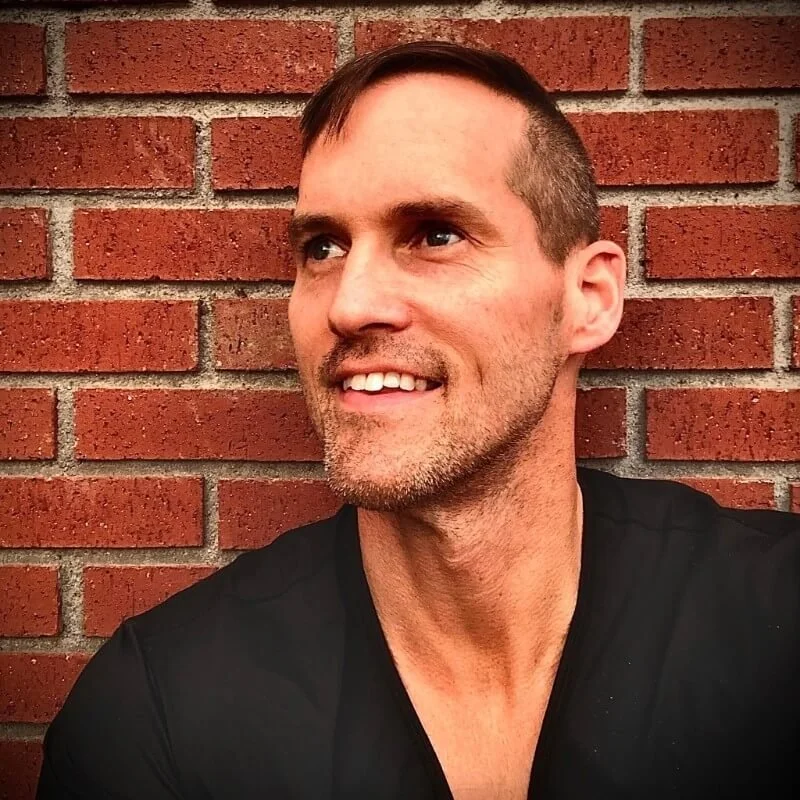
By Aaron Van Voorhis, Lead Pastor at Central Avenue Church
Listen to the full podcast conversation on this topic.
“What is the meaning of life?”
It’s a common question most people ask themselves. And also one of the most ambitious questions we can ask. It’s timeless, universal, and unavoidable. At some point (often many points) we all find ourselves asking it. Because beneath our routines, responsibilities, and distractions, we carry a deep desire for meaning and purpose. And just as often, we struggle to find it.
Over time, I’ve come to see that there are four broad ways people tend to find meaning in life. These aren’t fixed or rigid categories. They overlap, bleed into one another, and often coexist within us. I’m not interested in ranking them or arguing that one is superior to another. All four can be meaningful. All four work for some people and not for others. The real question is: what works for you?
1. Religious Meaning
In the Christian tradition, the most common answer to the question of meaning goes something like this:
Life’s meaning is to believe in God, have a relationship with God, worship God, go to church, and do God’s will. Period. End of story.
This is a top-down understanding of meaning. We don’t create it or discover it for ourselves; it’s handed down to us by an ultimate authority. God determines the purpose and meaning of all things, and that meaning is revealed, primarily through scripture.
This way of understanding meaning works deeply and beautifully for many people, both conservative and progressive Christians alike. And that’s genuinely good. Where it becomes problematic is when it’s taken too far: when people insist that without belief in God, life necessarily collapses into nihilism.
Nihilism, broadly speaking, is the belief that life is utterly meaningless, that nothing ultimately matters. And many devout people argue that without God, nihilism is the only alternative. Ironically, I think that claim itself is deeply nihilistic. It suggests that human beings are incapable of meaning unless it’s externally imposed upon them.
But what if the opposite is true?
What if the absence of a divine overseer doesn’t eliminate meaning, but actually creates the most fertile ground for it?
There is something profoundly meaningful about creating meaning out of meaninglessness. Jesus hints at this kind of radical logic when he says, “If you only love those who love you, what credit is that to you?” Love becomes truly love only when it’s given unconditionally, when it’s offered without guarantee or reward.
I want to suggest that meaning works the same way. The deepest meaning may only emerge after we’ve honestly faced the possibility that life has no inherent meaning at all. Some of us can stare into that abyss and make peace with it. Others can’t, and that’s okay. But it does mean that religion does not get the final word on meaning.
Still, even for those of us who have deconstructed or moved beyond traditional belief, religion can remain a powerful source of meaning. Rituals, stories, symbols, and shared practices connect us to something ancient and communal. Sometimes deconstruction goes too far when it severs us entirely from the myths and traditions that once grounded us.
2. Metaphysical Meaning
The second category I call metaphysical meaning. It’s not overtly religious, but it is deeply spiritual.
This perspective says that we are not separate from ultimate reality, we are expressions of it. God, in this view, is not a being “out there,” but the ground of being itself. The mystery in which we live and move and have our being.
We are conscious, feeling, thinking parts of the universe. Stardust that woke up.
Think about that for a moment. Atoms somehow arranged themselves into beings capable of love, wonder, grief, and joy. That alone is astonishing. From this perspective, we are not isolated fragments of reality, we are the universe experiencing itself as human beings.
Like waves on the ocean, we appear briefly as distinct forms, but we are never separate from the whole. When a wave dissolves, it doesn’t disappear, it returns to the ocean. In the same way, death may be the end of a particular expression, but not the end of what we fundamentally are.
I’m not 100% certain of this. I’m not 100% certain of anything. But this is where I lean. And it fills my life with awe, beauty, and depth. This isn’t new or trendy thinking, it’s ancient, stretching back through Plato and well beyond.
3. Social Meaning
The third category is social meaning, and it may be the most universal of all.
To be human is to be relational. We are social animals. Our well-being (mentally, emotionally, even physically) is deeply tied to our connections with others. Love, friendship, community, and shared purpose give life its texture and weight.
This is also where politics belongs, not as ideology, but as the lived social structures we create together. Politics is how we decide to care for one another, organize our communities, and distribute power and resources.
Scripture itself tells us that there is nothing greater than love. And if, as 1 John says, “God is love,” then love itself becomes the most sacred reality we know. The divine is encountered not somewhere else, but in the spaces between us, where compassion, justice, and solidarity take root.
4. Material Meaning
Finally, there is material meaning, the meaning we find in the things we love and value such as our work, our hobbies, our creativity, our bodies.
I once asked a 95-year-old hospice patient what had given his life the most joy. His answer surprised some people. It wasn’t his career or even his relationships. It was sports (basketball, baseball, running track). He showed me black-and-white photos of himself competing decades ago, his face lit up with joy.
To some, that might seem trivial. But it isn’t. Meaning often lives in the so-called “little things.” Finding the extraordinary in the ordinary is one of life’s great skills. The ordinary is extraordinary, if we learn how to see it.
Creating Meaning in a Meaning Crisis
The truth is, human beings are meaning-making machines. We create meaning constantly: out of relationships, experiences, suffering, beauty, and even nothingness. Perhaps that’s what it means to be made in the image of God: the capacity to bring meaning into the world.
So the question isn’t what is the meaning of life.
The question is: What gives your life meaning?
We live in a time of profound meaning crisis. We are flooded daily with tragedy, violence, injustice, and fear, far more than our nervous systems were ever designed to handle. In such a world, spiritual communities matter more than ever. They can become oases: places of rest, reflection, honesty, and connection.
My hope is that Central Avenue Church is that kind of place. A space where you are invited to explore meaning honestly, to wrestle with doubt, to love fiercely, and to say yes to life, even when it makes no promises.
As we go from this place, may we commit ourselves to the path of love, honesty, and humility. May we dedicate ourselves, as Christ did, to justice and to the courageous embrace of this life, this world, and each other.
Amen.